FCC approves orbital space mirrors, first test satellites will launch this year — large spacecraft reflects sunlight to Earth’s surface for construction sites, search-and-rescue lighting, and more
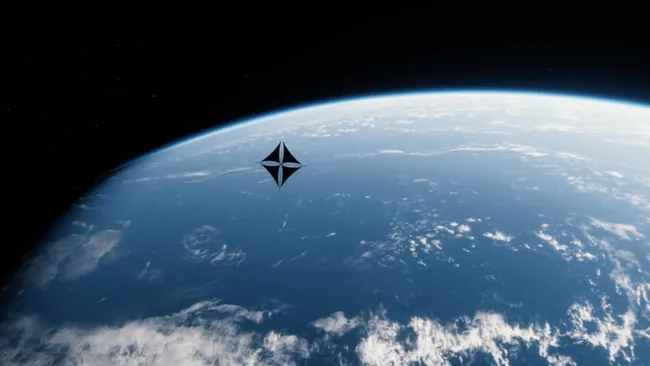
Reflect Orbital, a California startup that markets itself as “The Sunlight Company” and aims to make “clean, abundant energy available on demand,” has just received approval from the Federal Communications Commission (FCC) to launch the Eärendil-1. According to Space News, this is a low-earth orbit satellite equipped with four 18-meter (~60ft) thin-film reflectors designed to reflect sunlight on specific areas on Earth. This deployment will test the spacecraft’s capabilities in extending daylight for several minutes, which can be used from lighting construction sites and search-and-rescue operations to increasing solar farm energy production.
“We’re grateful to the FCC for recognizing the importance of testing novel technologies in space,” Ben Nowack, chief executive of Reflect Orbital, said in a statement. “This license is the first step toward rigorously testing our technology’s efficacy and the safeguards we have developed.” While the company envisions launching two satellites into space this year, it says on its website that it wants to deploy more than 50,000 satellites by 2035, allowing it to provide “up to 36,000 lux for hours comparable to daylight” or “up to 100 lux 24/7 comparable to indoor working areas.”
This idea is similar to the Icarus satellite developed by the antagonist in the James Bond movie Die Another Day, which was supposed to deliver “light and warmth to the darkest parts of the world” and “grow crops the year round, bringing an end to hunger.” The Reflect Orbital satellite could potentially achieve the same things, but experts from various fields are concerned about its potential adverse effects.
Astronomers from across the world criticized the project, saying it would make it harder to observe the night sky and could even be dangerous to sensitive instruments and people using telescopes. The Chief Scientist of the Vera C. Rubin Observatory, Tony Tyson, said that this plan to light up the ground using orbital mirrors was “even crazier” than the Starlink satellite constellations that have been affecting nighttime observations. The European Southern Observatory (ESO), which operates several telescopes in the Chilean desert, said that Reflect Orbital’s full deployment “would increase the background sky brightness at its facilities by a factor of three to four, limiting the ability of telescopes to detect faint objects.”
The orbital space mirror’s potential for disrupting astronomy is even greater than the threat posed by Elon Musk’s planned million-satellite Orbital Data Center and China’s planned competing project. But aside from making it harder for astronomers and scientists to survey the night sky, environmentalists also raised their reservations, saying that artificially extending daytime could disrupt the day-and-night cycles that the biology of living beings — from plants and animals to humans — rely on.
Unfortunately, the FCC said that scientific and environmental concerns were outside its jurisdiction. The government regulator only deals with “interstate and international communications by radio, television, wire, satellite and cable in all 50 states, the District of Columbia and U.S. territories.” Instead, it appears that the project’s critics should reach out to the EPA and NASA, as these are the relevant agencies that deal with concerns regarding space and astronomy. But even if the FCC had authority over the issues raised by its critics, it seems that the project will still push through as it considers that “…it is in the public interest to make spectrum available to encourage companies to test new and innovative space activities, as it promotes American innovation and the new services and economic growth that come from that innovation.”
Comentários
Enviar um comentário