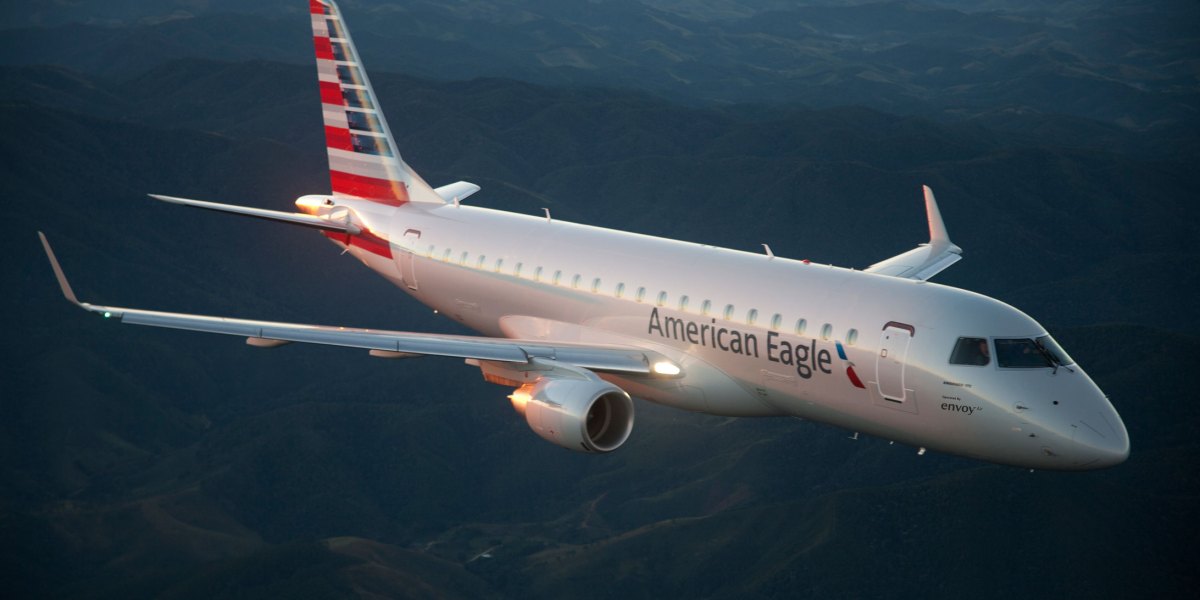
FAA confirms Embraer 175 passenger plane hit balloon, not drone, after taking off from O’Hare
Reverse the presses! It turns out the drone that an Envoy Air Embraer passenger plane reported it had hit August 22 wasn’t in fact a drone. Instead, the Federal Aviation Administration (FAA) tells DroneDJ it has confirmed the object was a balloon.
The FAA’s response to a DroneDJ email was short and to the point. Although published audio recordings had quoted the Embraer 175 passenger plane’s pilot stating “I believe we hit a drone about 30 seconds ago” after takeoff from Chicago’s O’Hare Airport, the FAA says the airborne obstacle struck was in fact one of the large helium balloons popular with children these days.
“The FAA determined the object was a Mylar balloon,” a FAA spokesperson responded to DroneDJ’s request for information after several reports had published the same information. Much like the FAA’s statement, those stories contrasting initial coverage that Envoy Air’s flight ENY396 had struck a drone four miles after departure were slim on detail, which prompted our request for confirmation.
Without additional information, however, it’s unclear how the FAA determined the culprit was a balloon – though there are anecdotal reasons for why that would make sense.
Very quickly after the Embraer 175 had circled back and landed, the FAA inspected the plane and described the consequences of the collision as minor. The airliner was cleared for service and resumed normal operation the following day. Given the degree of damage other passenger planes have suffered after hitting drones, the limited signs of impact on the Envoy Air craft makes a less solid object having been involved more likely.
Still unknown is whether FAA inspectors found bits of the balloon stuck to the plane to identify it, or perhaps had external imagery from the Embraer’s cameras to help determine the culprit as definitively as they have. Either way, flight ENY396’s collision mystery appears to have been solved (albeit laconically so).
Given the recent series of near-misses or direct hits between drones and passenger planes, it is not entirely illogical that initial suspicion turned to an uncrewed aerial vehicle (UAV) – an assumption also reinforced by the pilot’s comments. The incidence of those craft flown in restricted airspaces have caught much attention of late.
As DroneDJ reported, a Cessna plane in the Toronto area sustained “major damage” after being struck by a York Regional Police drone earlier in August – an accident that still raises more than a few questions. A JetBlue passenger plane reported a UAV passed below it about six miles northeast of Boston Logan International Airport as it was landing on August 15. There have also been several near-miss cases in Europe involving both commercial craft and air ambulances encountering drones in banned airspaces, or at unauthorized altitudes.
Fortunately that was not the case above Chicago on August 22, which instead will be tucked away in the passenger-plane-meets-airborne-party-decoration file.
Por Bruce Crumley em:
https://dronedj.com/2021/08/31/update-faa-says-envoy-air-passenger-plane-hit-balloon-not-drone/
Comentários
Enviar um comentário